

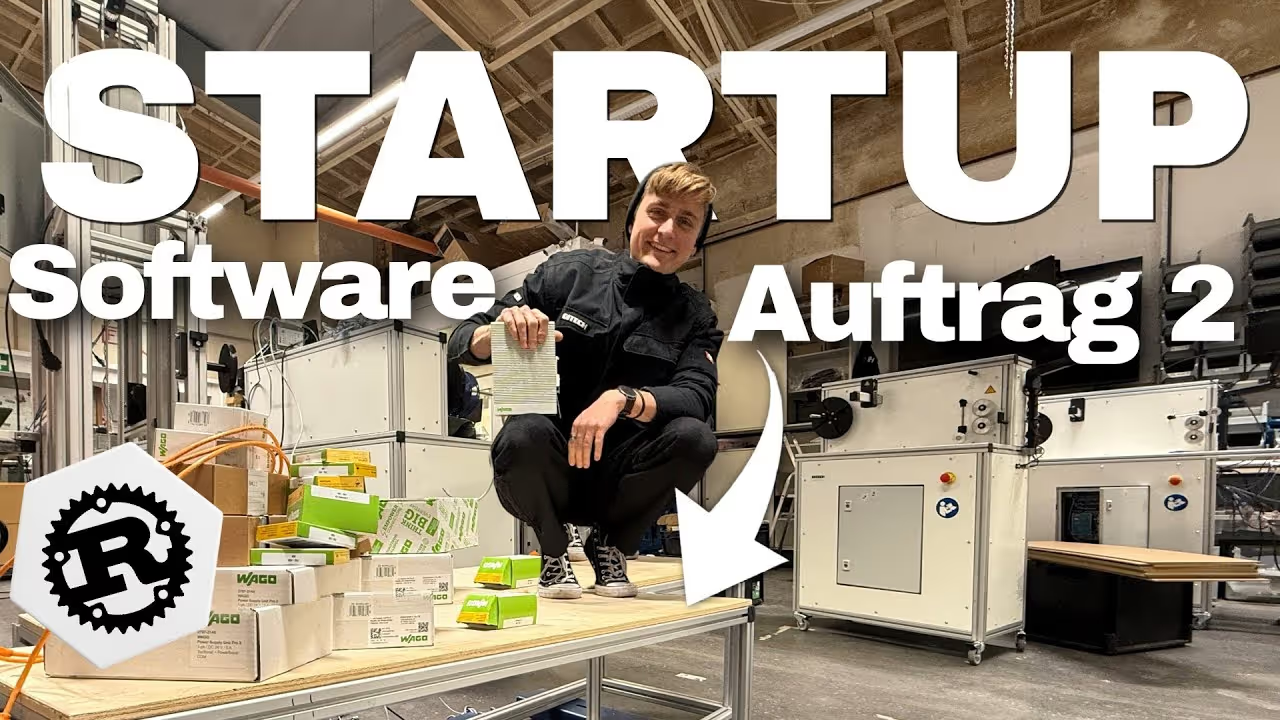
In addition to recycling machines and filament production, we at QiTech also develop customized automation software for industrial customers. Our steel mill project shows how such an order progresses from the first line of code to the finished plant.
The task: automatically weighing and counting steel plates
The project kicked off on November 20, November . The task: to integrate four industrial load cells onto a conveyor belt in order to automatically detect steel plates. The software was required to recognize, count, and categorize different types of plates based on defined tolerance values.
At first glance, this sounds straightforward. However, the challenge lay in the details: the load cells use their own protocol, which is neither true EtherCAT nor Modbus. We had to set up a DHCP server, assign IP addresses, and resolve data communication via UDP. After some troubleshooting, the connection was up and running.
From the dummy solution to the finished setup
After we had finished implementing the measurement logic, the final UI displays the current weight, the total weight, and a plate counter for three different plate types.
As with our first automation project, we set workspace a dummy solution in our workspace to test the interaction between hardware and software directly. On November 29, everything November together: touchscreen connection, signal lamp for alarms, and remote access to the customer's SAP system. And on December 2, approximately two weeks after the start of the project, the finished setup was taken to the steelworks for final testing on site.
Software expertise meets industry requirements
Our automation software is based on the same technology as QiTech —robust Rust code and real-time performance. We have transparently documented the entire development process, including all technical challenges, on our reference project page. If you want to dive even deeper, you can find behind-the-scenes insights on our QiTech YouTube channel.


