
Extruder
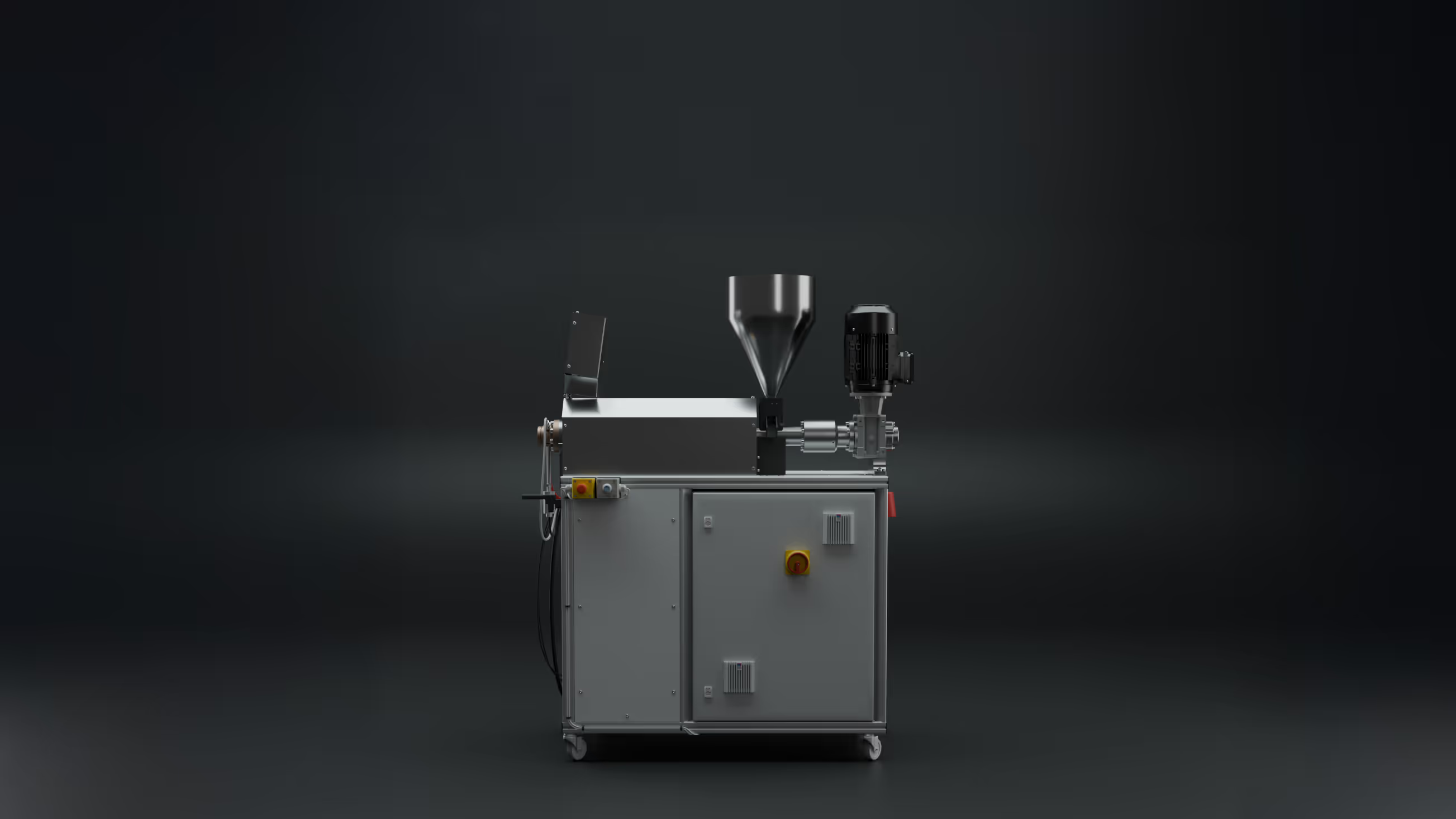
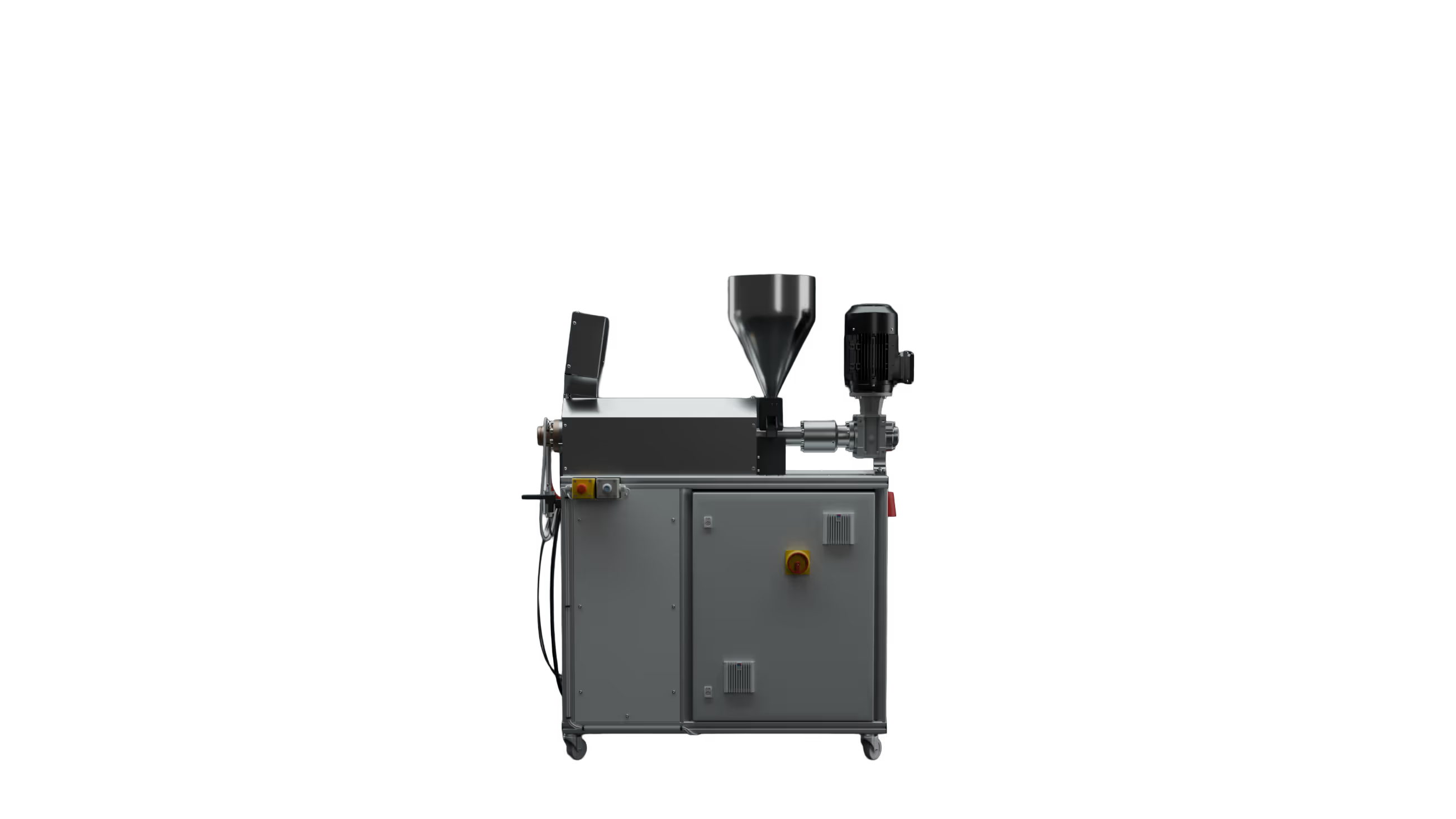
Our laboratory extruder for your filament. With four heating zones, a melt pressure sensor, and a replaceable screw—also suitable for recycled material and fiber-reinforced compounds.
How you can use the Extruder in your filament production or material tests
Learn more in our new video!
Why you should buy the


Why choose our extruder?
Our Extruder is designed for university labs, R&D departments, and small-batch production. A mass pressure sensor continuously measures the pressure just before the Nozzle . If the Nozzle becomes clogged, the machine shuts down before dangerous overpressure builds up, which could potentially damage the Extruder . A rupture disc provides additional protection. This allows even fiber-reinforced materials such as CF-PLA or GF-ABS to be processed safely.
Safety was a priority right from the concept phase: Together with SUEDSPITZE, we have CE-certified our entire Pro bundle.

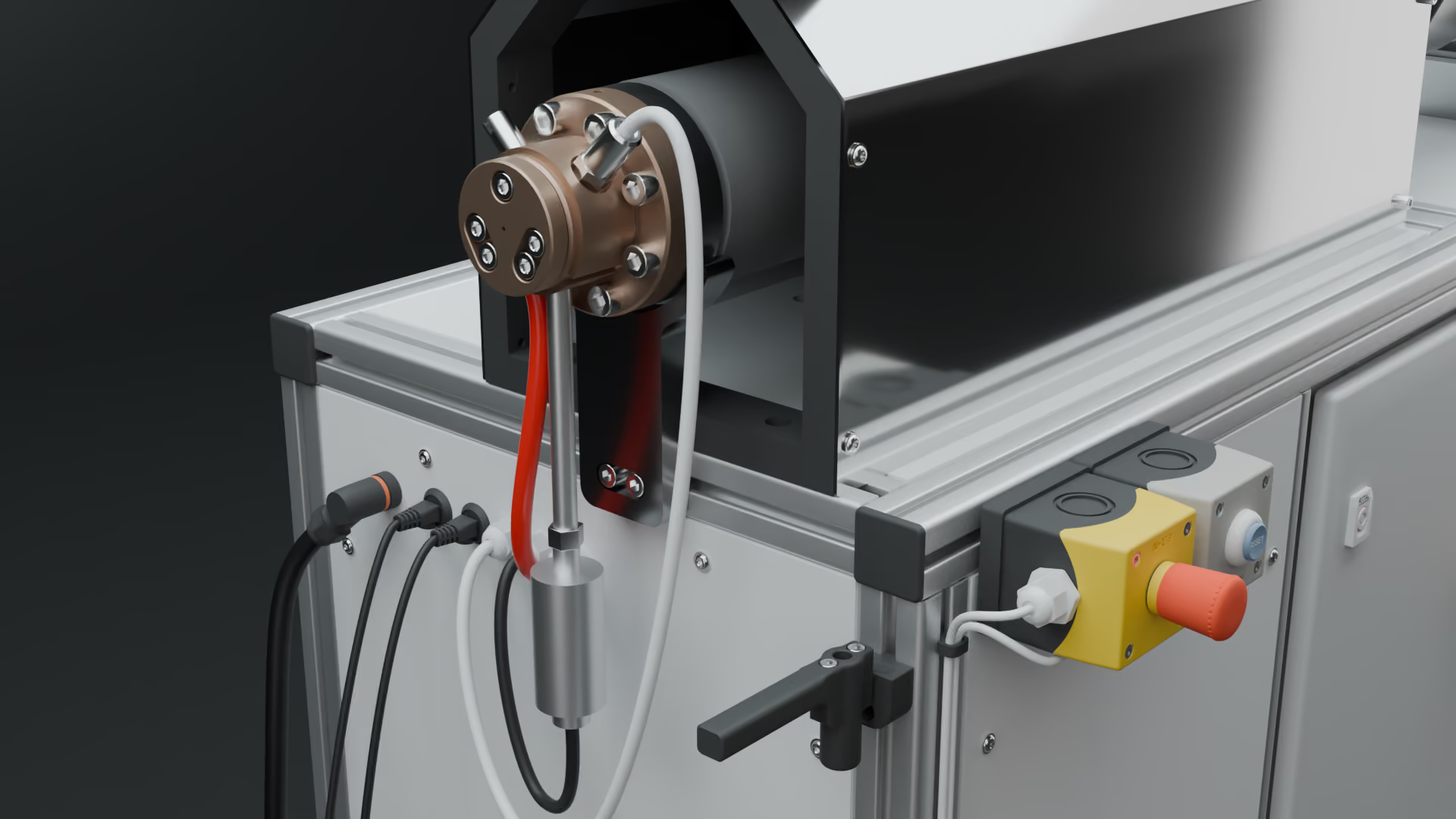
In cooperation with a local switch cabinet manufacturer, we equip our laboratory-Extruder with high-quality switch cabinets, because safety and performance are our top priorities.

QiTech Control
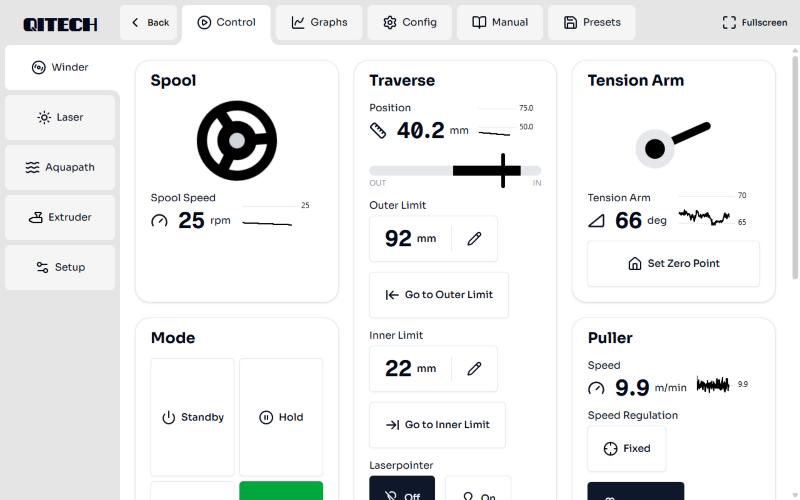
Extruder, You control the laser and winder via a touch panel: real-time data, graphs, and presets, all synchronized across the entire line. Try out the interface right here—the demo runs in your browser, without needing a machine.
Features
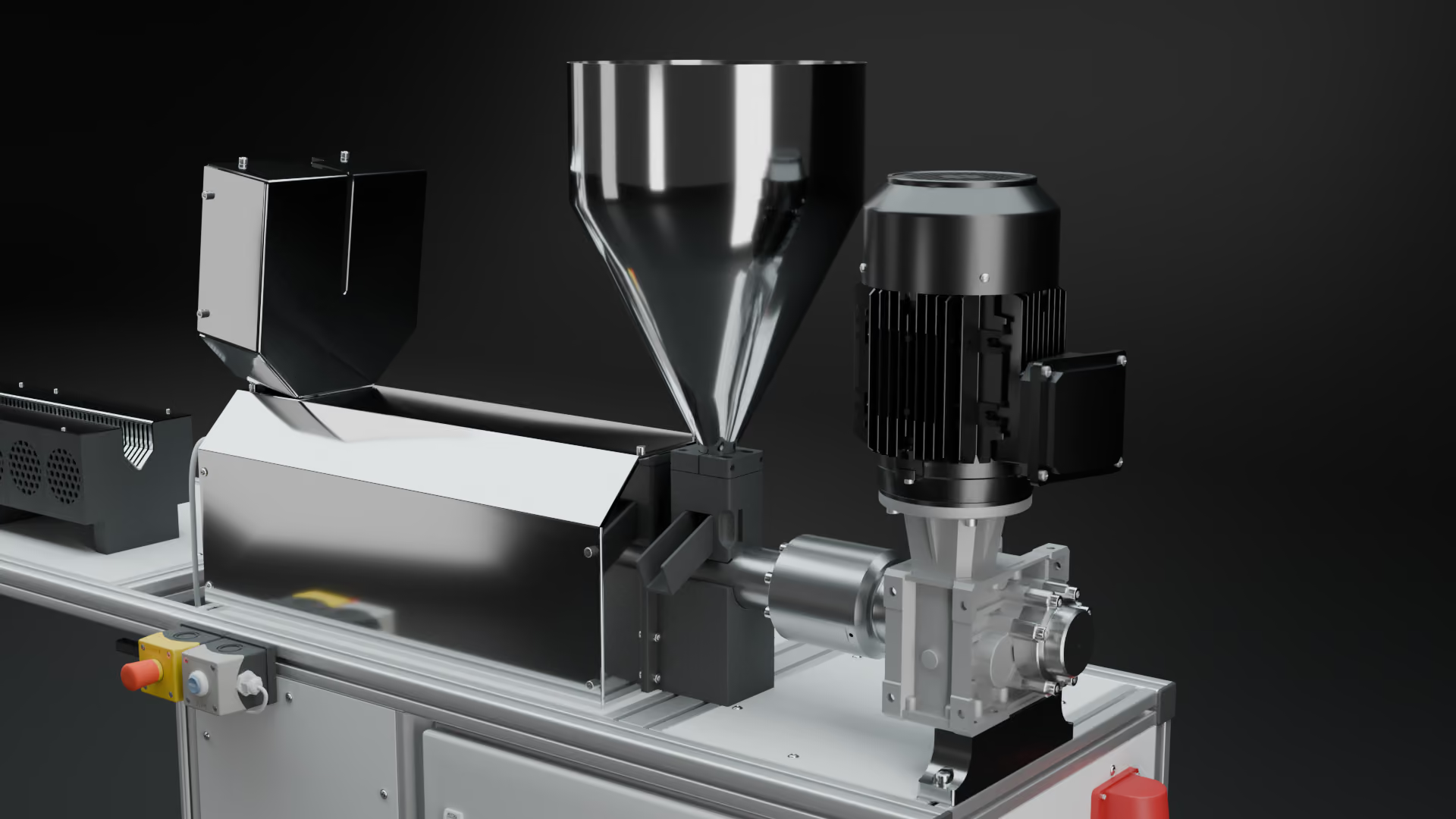
The hopper is made of stainless steel and has a capacity of about 15 liters, though it can be easily expanded using an adapter plate.
Its shape is designed for angular recycled material to prevent anything from getting wedged in the inlet (“bridging”). That way, you don’t have to stand there constantly with a shovel. You can remove residual material via the side discharge chute without having to disassemble the hopper.
Next to it is the motor, rated at 2.2 kW, 96 rpm, and 210 Nm at the output shaft. It drives the auger via a hollow shaft, keeping the path to the rear clear.
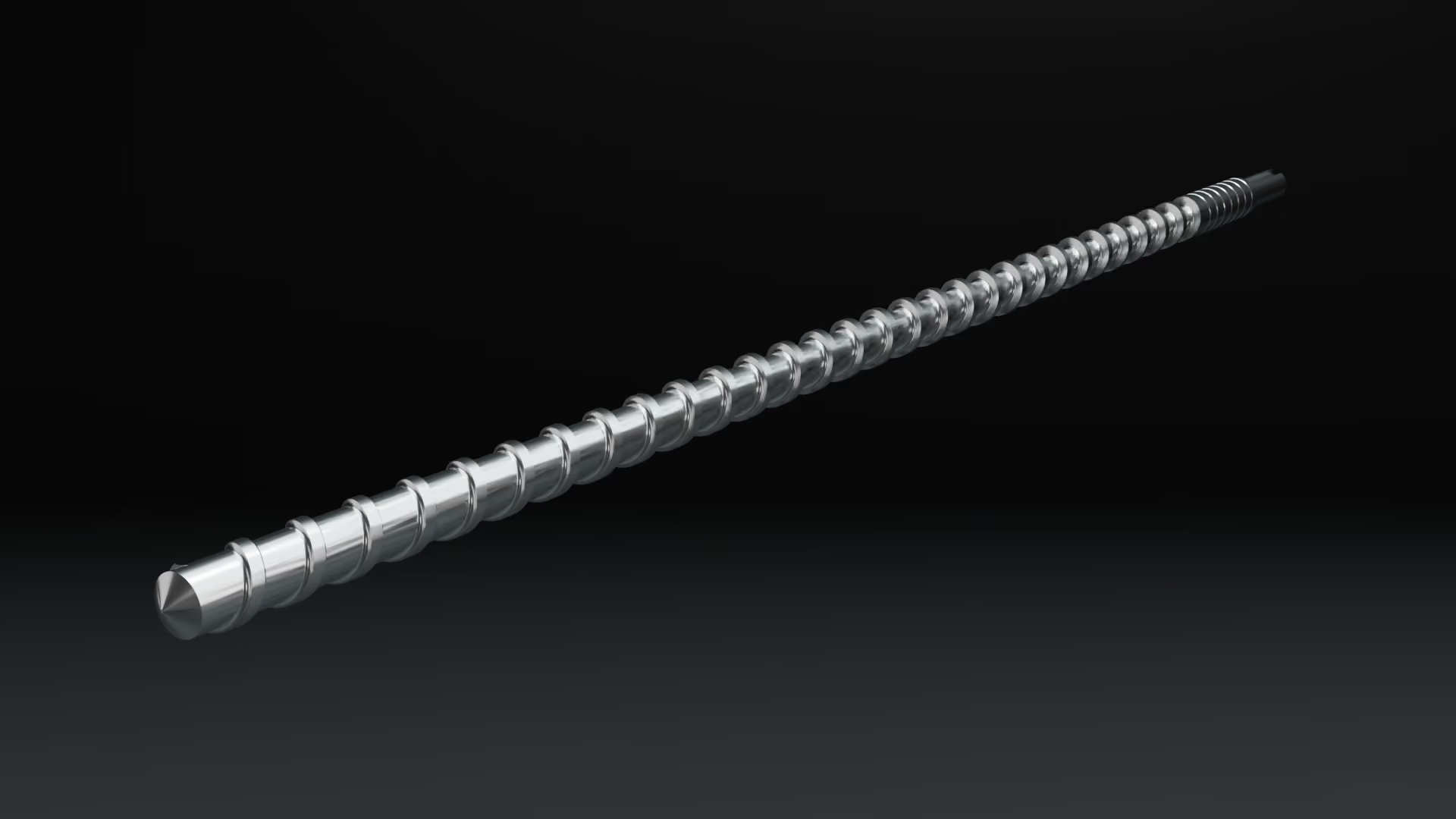
The screw is 25 mm thick and 897 mm long. This results in an L/D ratio of approximately 36, and the compression ratio is 3:1.
You can replace it from the rear. You don’t have to disassemble the Extruder to do so, which saves time during cleaning and material changes.
If you need more mixing, the screw is optionally available with mixing zones.
P.S.: For a screw, it’s pretty fast—up to 96 RPM.
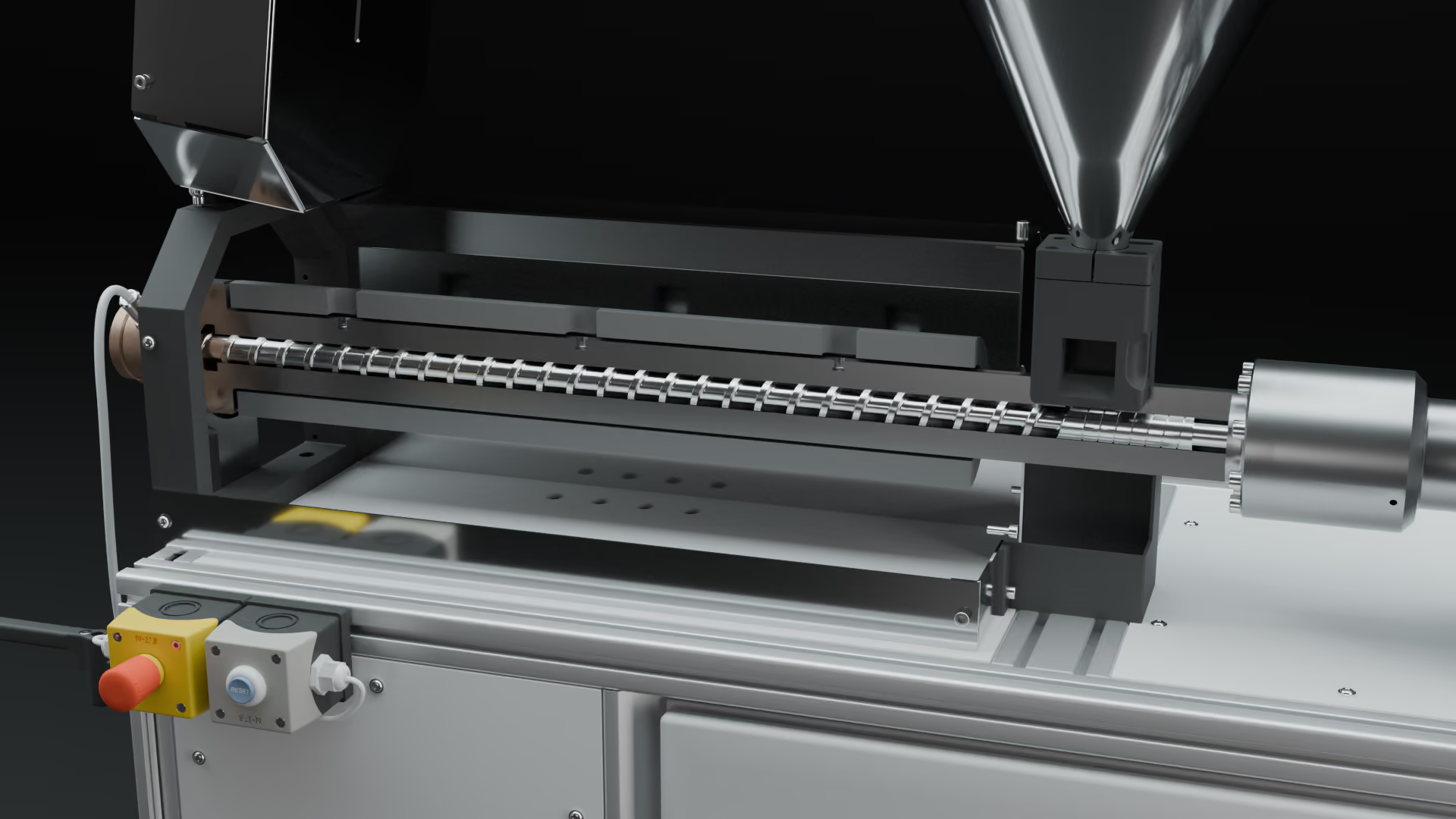
The screw runs inside a bimetal cylinder with an outer diameter of 110 mm. It is designed for abrasive materials such as carbon fiber or glass fiber.
There are a total of four heating zones: three on the cylinder and the fourth on the Nozzle. You can adjust each zone individually to create a temperature profile tailored to your material.
The standard maximum temperature is 300 °C. If you need a higher temperature, we can upgrade the system to 400 °C upon request.
Just before the Nozzle , a mass pressure sensor continuously measures the pressure. If it exceeds your limit (default 100 bar, adjustable), the software shuts down the motor.
If that’s not enough, the rupture disc on the nozzle head opens and releases the melt to the side—purely mechanically, without software. And if you want (or need) to intervene yourself, the emergency stop switch on the control cabinet immediately shuts everything down.
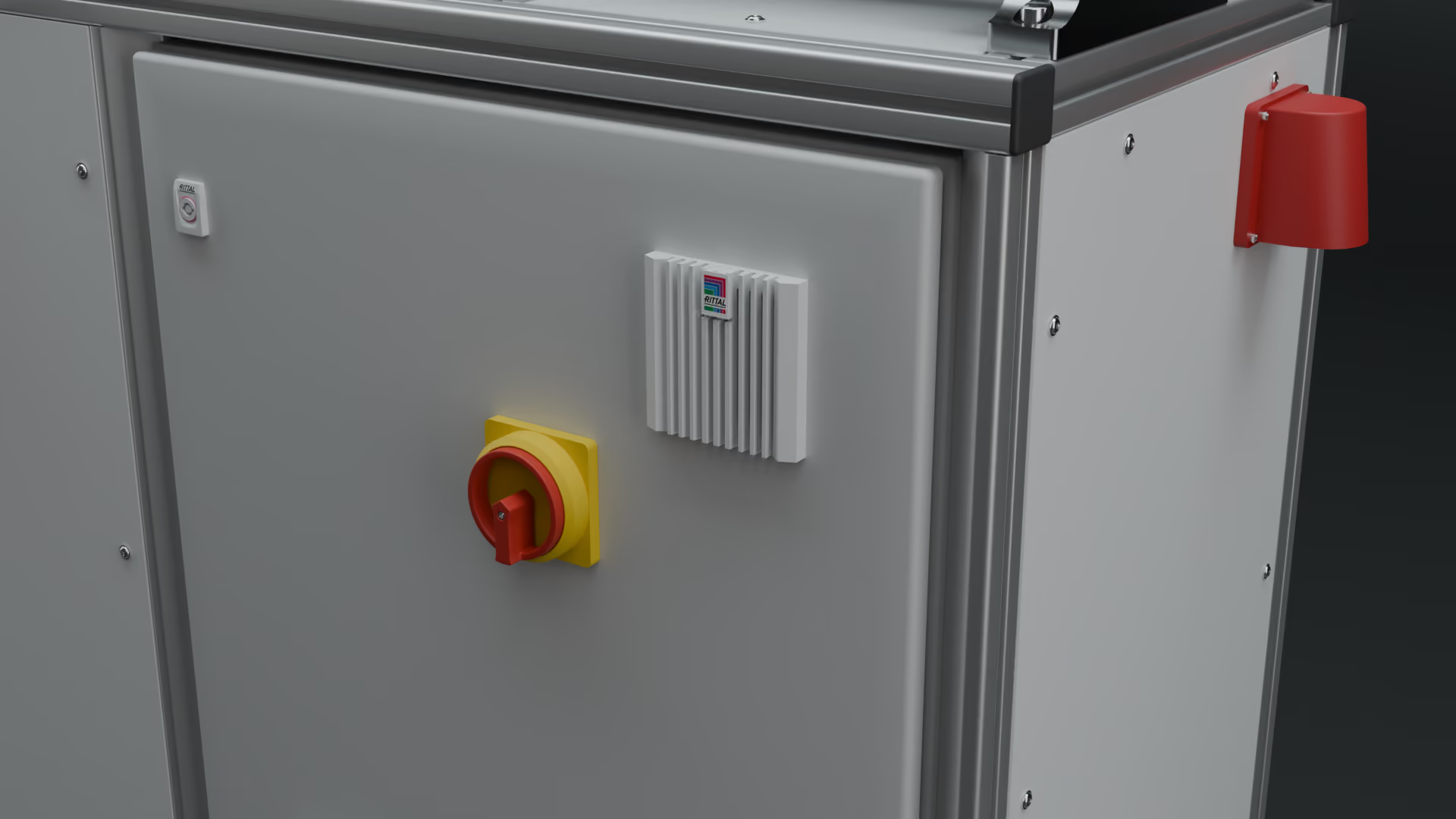
We build the control cabinet ourselves using industrial-standard components from Beckhoff and Wago, connected via EtherCAT—in other words, components that you’ll also find in large production facilities.
The entire system is controlled by our own software, QiTech Control.
When it comes to the electrical work, we follow the dual-control principle: Every control cabinet is also reviewed by a master control cabinet builder from the region with whom we work closely.
Improve the quality of your filament using the Digicolor dryer
Do you have any questions or would you like a quote for the Extruder?
Get in touch with us!



We cannot provide a general answer regarding the throughput (e.g., in kg/h) that our Extruder can achieve, as the achievable throughput is always influenced by many other parameters, such as the type of plastic, the temperature, your pellet size, or the nozzle diameter of the Nozzle used.
As a reference value for a rough estimate: We produce approximately 10 kg pro of PETG per hour at maximum speed.
Currently about 15 liters.
Included in the package:
5 steel nozzles
1x 1.75 mm
1x 3 mm
3x blank (with 1 mm pilot hole)
The blanks allow customers to drill a nozzle diameter suitable for their specific application themselves, if needed. The nozzles are manufactured with a left-hand thread to prevent them from gradually unscrewing through the plastic.
Additional nozzles with short lead times are also available from us at a later date! Just contact us.
The funnel’s shape was chosen to enable the processing of recycled material (angular granule flakes measuring 3–5 mm).
However, the uniformity of the input material’s shape and size is crucial for maintaining a consistent diameter during filament production.
When using angular flakes for extrusion, there is a risk of “bridging” in the hopper, whereby individual, larger flakes become jammed at the inlet, causing a brief reduction in material feed. To address this, our Extruder features a vibrating unit that can be placed inside the hopper to periodically shake up the feed material.
Thanks to the intelligent control system of the QiTech extruder, the extruder speed can also be continuously adjusted to ensure constant pressure and output at the Nozzle .
The cylinder volume is 72cm³, which is approximately 85 g (PC)
The screw runs inside a bimetal cylinder with an outer diameter of 110 mm and a length of 840 mm. It can withstand even abrasive materials such as carbon fiber or glass fiber. The screw itself measures 25 × 897 mm, has an L/D ratio of approximately 36, and a compression ratio of 3:1.
It can also be easily replaced from the rear.
The QiTech Extruder has already been tested with thermoplastic compounds and inorganically filled composites.
With inorganically filled composites, there is a risk of clogging the Nozzle, which can result in dangerous pressure buildup and damage to the extrusion unit. We have already experienced this with our prototypeExtruder .
However, our Extruder is equipped with a pressure sensor and an automatic shut-off mechanism as a safety feature to prevent excessive pressure buildup. As a result, even laboratory tests with inorganic-filled materials pose no safety risk.
Up to 300 °C as standard. If you need a higher temperature, your Extruder can be upgraded to up to 400 °C upon request.


